24-HOUR ANSWERING SERVICE
NO OVERTIME CHARGES - EVER
LICENSE #401802
SERVING SACRAMENTO SINCE 1981
24/7 Emergency Service Available

Attic HVAC Services

Your HVAC equipment lives in a 140-degree attic. We make sure it's not fighting a losing battle.
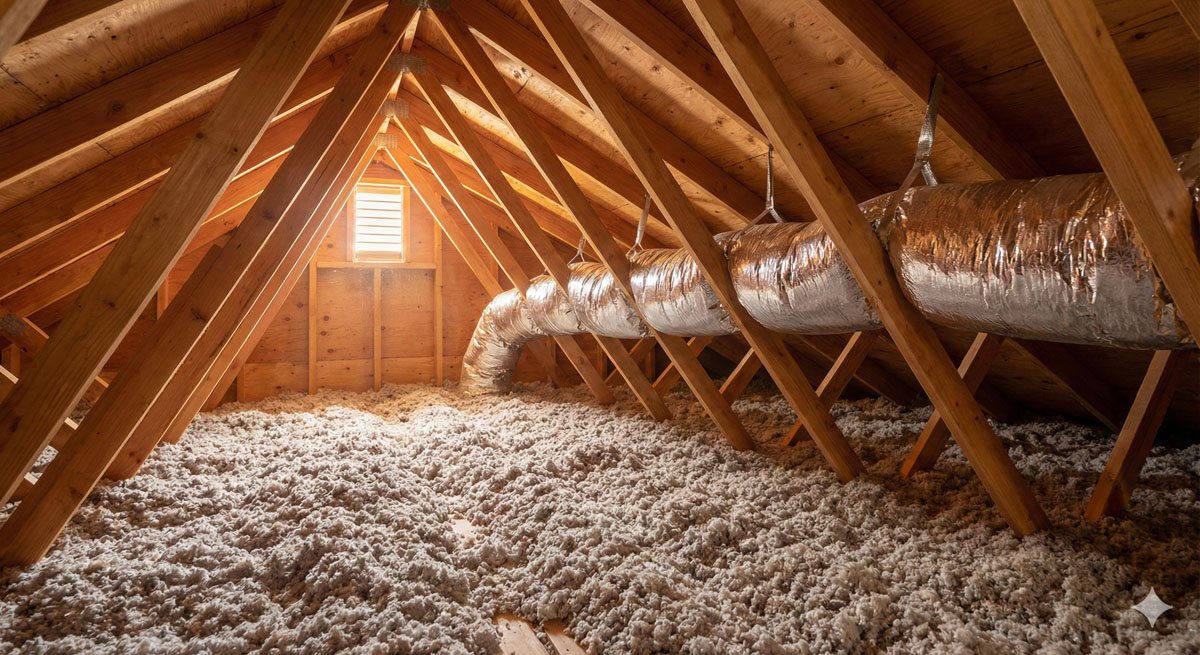
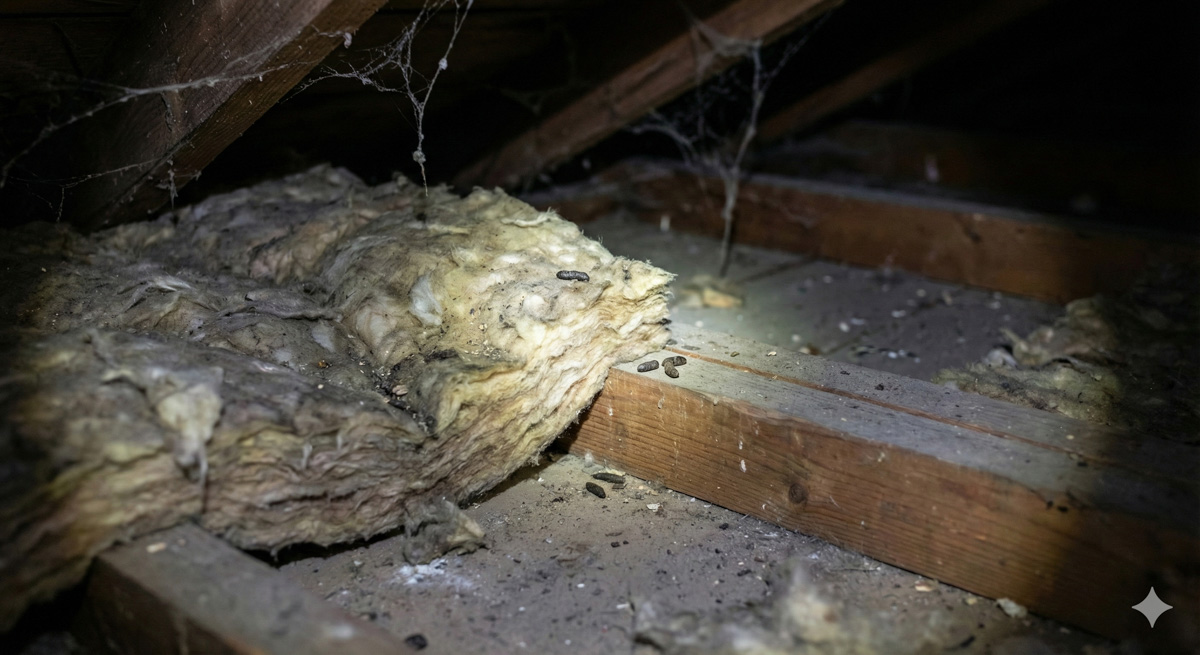
Attic HVAC Inspection
Duct Sealing & Repair
Equipment Assessment
Licensed Since '81 (#401802)

What's Going On In Your Attic?

Most homeowners never go up there. Meanwhile, ductwork is falling apart, insulation is missing, and equipment is cooking in summer heat. Out of sight, out of mind—until it's a problem.

Read More

Sacramento attics are brutal. 140 degrees in summer. That's where your air handler sits, where your ducts run, where a lot of problems hide.What we find when we actually look:Ductwork disasters: Flex duct that's been up there 30 years, falling apart. Connections that have pulled loose. Runs that got crushed when someone stored Christmas decorations. Every gap is conditioned air dumping into your attic instead of your rooms.Insulation problems: R-8 duct insulation that's deteriorated to nothing. Equipment closets with no insulation. Air handler sweating in summer because the attic heat is overwhelming it.Equipment issues: AC coils caked with dust because the filter was never changed. Drain pans rusted through. Electrical connections corroded. Stuff that would have been caught years ago if anyone had looked.Platform and access problems: Equipment installed on platforms that are sagging or rotted. Access so tight you can't service anything properly. Code violations from the original install that nobody caught.Why this matters:You're paying to cool your attic. That hot room that never feels right? Probably duct-related. Those energy bills that keep climbing? Probably losing 30% of your airflow before it reaches the vents.We actually go up there and look. Not a sales pitch—a real assessment of what's happening above your ceiling.

Spot the Warning Signs

Click the signs you're experiencing

Rooms That Won't Cool
Energy Bills Don't Make Sense
Haven't Been Up There in Years
AC Runs Constantly

Select the warning signs you're experiencing

Call To Confirm The Warning Signs

Our 4-Step Solution Process

Transparent, effective, guaranteed results

1

Attic Inspection

We get up there, look at everything, and report back what we find.

Learn More

Real inspection means eyes on everything.We check: all ductwork for damage, disconnections, and insulation condition. Equipment condition—coils, drain pans, electrical, general wear. Insulation around equipment closets. Platform condition. Ventilation and moisture issues.We take pictures so you can see what we're seeing. No "trust me, it's bad"—we show you.After the inspection, you get a clear report of what's wrong and what it would take to fix it. Prioritized by what's costing you the most.

2

Duct Assessment

We check every run, connection, and boot for leaks and damage.

Learn More

Ductwork is usually the biggest problem in attics.We trace every run from the plenum to the register. Check connections at boots, wyes, and takeoffs. Look for crushed sections, disconnected joints, failed insulation.We can pressure-test the system to measure total leakage. Sometimes that number is eye-opening—30-40% leakage isn't unusual in older homes.You'll know exactly how bad it is and what fixing it would cost.

3

Repair & Remediation

We seal, repair, or replace what's not working. Proper materials, proper methods.

Learn More

Attic repairs are miserable work—hot, cramped, uncomfortable. We do it right anyway.Duct sealing: Mastic and proper tape on every joint and connection. Not hardware store duct tape—real sealant that survives attic temperatures.Duct repair: Replacing crushed runs, reconnecting disconnected sections, reattaching boots. New insulation where it's missing or failed.Equipment service: Coil cleaning, drain line clearing, electrical inspection. The maintenance that should have been happening all along.When replacement makes more sense, we'll tell you. Sometimes patching old ductwork is throwing good money after bad.

4

Verification

We test after repairs to prove it made a difference.

Learn More

We don't just seal things up and disappear.After repairs, we measure airflow at registers again. Check static pressure. See if the problem rooms are finally getting air.You should feel the difference. If that hot room is finally cooling down, we did our job.We document everything with before and after measurements. You have proof the work mattered.

Why Choose JR Putman Plumbing, Heating and Air

We Actually Look

Real inspection in your attic. Pictures of what we find.

Honest Report

What's wrong, what it costs to fix, prioritized by impact.

Proper Repairs

Right materials, right methods. Even when it's 140 degrees up there.

Proven Results

Before and after measurements. We prove it worked.

Frequently Asked Questions

Why does my attic matter for HVAC?
Your attic can hit 140°F in Sacramento summers. If your ductwork and equipment are up there, they're fighting that heat constantly. Proper insulation, ventilation, and radiant barriers make your HVAC system's job much easier.
How hot should my attic be?
Ideally, no more than 10-20°F above outside temperature. If it's significantly hotter, you have inadequate ventilation. Proper attic ventilation extends roof life, reduces cooling costs, and protects HVAC equipment.
What's a radiant barrier?
A reflective material (usually aluminum) installed in your attic that reflects radiant heat instead of absorbing it. It can reduce attic temperatures by 20-30°F and reduce cooling costs by 5-10%. Very effective in Sacramento's sunny climate.
Should I add more attic insulation?
Probably. Most Sacramento homes have less insulation than current standards recommend. Adding insulation is one of the best energy investments you can make—it helps with both heating and cooling.
Does attic ventilation affect my AC?
Absolutely. Poor attic ventilation means your AC ducts are running through a 140°F+ space. Even insulated ducts absorb heat. Better ventilation keeps attic temperatures down and helps your entire system work less.
How much insulation should my attic have?
Current recommendations for our climate zone are R-38 to R-49, which is about 12-16 inches of blown-in insulation. Many older homes have R-19 or less. We can measure yours and tell you where you stand.

What's Hiding In Your Attic?

We'll find out and tell you what it takes to fix it.